Showing posts with label josh pincus. Show all posts

Oct 25, 2008

SFG: nice

The challenge word on sugarfrostedgoodness.com is "nice".
the madcap laughed at the man on the border
Syd Barrett was a founding member of Pink Floyd. He provided the musical direction and psychedelic influence in the band's early work. He recorded two albums with Pink Floyd and two solo releases before mental illness and heavy drug use put him into a self-imposed seclusion lasting more than thirty years.
Due to his abundant use of LSD, Barrett's behavior on stage was unpredictable. He would strum on one chord through the entire concert. Sometimes he would not play at all. At a show at The Fillmore West in San Francisco, during a performance of "Interstellar Overdrive", Barrett slowly detuned his guitar. The audience seemed to enjoy such antics, unaware of the rest of the band's consternation. Before a performance in late 1967, Barrett apparently crushed Mandrax and an entire tube of Brylcreem into his hair, which subsequently melted down his face under the heat of the stage lighting, making him look like "a guttered candle".
Following a disastrous abridged tour of the United States, David Gilmour, a school friend of Barrett's, was asked to join the band as a second guitarist to cover for Barrett as Barrett's erratic behaviour prevented him from performing. For a handful of shows David played and sang while Barrett wandered around on stage, occasionally playing. The other band members soon tired of Barrett's antics and, in January 1968, on the way to a show at Southampton University, the band elected not to pick Barrett up: One person in the car said, "Shall we pick Syd up?" and another person said, "Let's not bother".
Years later, in 1975 during the recording sessions for the "Wish You Were Here" album, Barrett showed up at the session unannounced, and watched the band record "Shine On You Crazy Diamond" — a song, coincidentally, about Barrett. By that time, Barrett had become quite overweight, had shaved off all of his hair, including his eyebrows, and his ex-bandmates did not at first recognize him. Eventually, they realized who he was and Roger Waters was so distressed that he was reduced to tears.
Barrett died in July 2006 of pancreatic cancer. The occupation on his death certificate was given as "retired musician."
In 2006, his home in Cambridge, England, was placed on the market and attracted considerable interest. After over 100 viewings, many by fans, his house was sold to a French couple who bought the house simply because they liked it—reportedly they knew nothing about Barrett.
Syd Barrett once said, "Fairy tales are nice." In his mind, he likely experienced a bunch of fairy tales.

Oct 17, 2008

phillies postseason


With The 2008 Philadelphia Phillies headed to their first World Series in fifteen years, I can only think of my father. My father died the day The Phillies won the 1993 National League pennant. This would be the Phillies' first trip to the World Series since their loss to The Baltimore Orioles ten years earlier. He didn't live to see the team that went "from worst to first" — his team— go on to play their hearts out against The Toronto Blue Jays. He didn't get to see the longest game in World Series history, most total runs scored in a single World Series game, and most runs scored by a losing team in a World Series game. He didn't get to hear about the death threats made to Phillies closer Mitch "Wild Thing" Williams. He especially didn't get to see Joe Carter's walk-off home run. I believe that had my father lived, that would have killed him.
My father was the typical Phillies fan. He loved them when they were winning. After a Phillies win, he would smile and pump his fist, proclaiming "All the way, baby! All the way to the World Series." When they were losing, he would snap the TV off in the fifth inning and grumble "Bums! They're bums!"
My father was a simple guy who led a simple life. He was born in 1926 and was raised by his father, a bigot in the truest sense of the word, who my mother called "the dumbest man ever to walk this planet". And by his mother, a stubborn, die-hard, Nixon-loving Republican, who my mother said "was too mean to die". Unfortunately, my mother was right. My grandmother outlived my mother by four years and my father by two. His simple pleasure was watching his Phillies. My father grew up watching and loving the Phillies. He loved to tell the story about how he cut school to go to a Phillies game. He saw a no-hitter and, because he was supposed to be in school, couldn't tell anyone that he was there. Well, my father also liked to make s*** up. It's a great story, but Chick Fraser pitched a no-hitter for the Phillies in 1903 and they didn't have another until Jim Bunning's gem on Father's Day 1964.
My father took my brother to Phillies games at Connie Mack Stadium. My mom and I would stay home and listen to the game on the radio. When I was old enough, my father took all of us to beautiful new Veterans Stadium. My father worked for local supermarket chain Pantry Pride and would get free tickets from his suppliers. My family would usually sit in the Oscar Mayer field box — about ten feet from first base. I remember during one game against The San Francisco Giants, shortstop Chris Spier threw a ball to first about twelve feet over the head of Giants' 6-foot 4-inch firstbaseman Willie McCovey. McCovey looked at Spier in disbelief and my father said to me "He was throwing that ball to you!"
My father cheerfully related stories about Richie Ashburn and the "Whiz Kids" (the 1950 Phillies). He remembered with contempt the Phillies' infamous 1964 ten-game season-ending collapse. Of course, he beamed when Tug McGraw struck out Kansas City's Willie Wilson to win their one and only World Series in 1980.
Sure, the Phils made it to post-season a few more times in the early 80s, but they ultimately suffered some lean years. My father suffered right along with them, cursing them all they way.
I can still picture my father settling down in his chair to watch a Phillies game. He had a Tastykake Chocolate Junior and the biggest f****** glass of chocolate milk you ever saw. To one side there were a few packs of Viceroy cigarettes, which he would run through by the bottom of the third inning. He'd fall asleep by the fifth and wake up in the bottom of the ninth, in time to catch my mom attempting to change the channel. "I was watching that!" he would state indignantly.
Last night, as my wife, my son and I watched the Fightin' Phils stomp the Los Angeles Dodgers right into the ground of Dodgers Stadium, I couldn't help but think of my father. I think my son was channeling my father when he said "I can't believe those b******* are going to the World Series!"
Well, Dad, it's been fifteen years coming.

Oct 14, 2008

SFG: scary

The current challenge on sugarfrostedgoodness.com is "scary".
People never notice anything.
Paul Goresh was a New Jersey college student and amateur photographer. He met John Lennon on two occasions by posing as a VCR repairman. He hung around outside of The Dakota with his camera hoping to get some pictures of Lennon. Paul was just a fan, but Lennon thought he was working for the press. Lennon didn't want his picture taken and he felt Paul was harassing him. Paul just wanted to take candid photos of the ex-Beatle.
Paul explained to Lennon's assistant that he didn't work for the press and he was just a fan. Paul encountered Lennon several more times and Lennon eventually warmed up to Paul, sometimes inviting him on walks through upper Manhattan.
Around 4:15 PM on December 8, 1980, Lennon was met by Paul on the sidewalk in front of The Dakota. Paul raised his camera and began snapping pictures. He photographed Lennon signing a copy of Double Fantasy for another fan that Paul had met earlier. In approximately seven hours, that other fan, Mark David Chapman, would fire four bullets into Lennon and kill him.

Sep 24, 2008

SFG: yummy

The sugarfrostedgoodness.com current challenge is "yummy".
For this uncharacteristically cheerful illustration, I took my inspiration from Dr. Seuss.
Pat-a-cake, pat-a-cake, baker's man
Here's my original story of "Mister McBaker O'Frosting Moran"
Mister McBaker O'Frosting Moran
Baked one thousand cakes and used only one pan
He concocted pink cupcakes
And yellow and blue
But he used just one pan
Not seven or two
Giant red cream cakes with sprinkles on top
A big plate of chocolatey brownies and glop
Crunch cookies and fudgy yum yummies with fudge
Six batches of rum raisin spice cinnamon sludge
A great big enormous sweet stick-ity bun
And the pans that he used only numbered to one
He mixed in the eggs and the butter and flour
And the baking was done in just under an hour
Petit fours were presented by O'Frosting Moran
And ten dozen tea cakes — all using one pan
Cakes for a birthday
Cakes for a bris
Cakes for a Christening
with a cinnamon twist
How, you may ask, could he just use one pan?
'cause there's magic in the kitchen
Of McBaker Moran

Sep 13, 2008

SFG: comfortable

The current challenge on sugarfrostedgoodness.com is "comfortable."
If you are too young to remember when "The Tonight Show" was hosted by Johnny Carson, then you probably don't remember Myron Cohen. Myron Cohen was a textile salesman working in New York City's "Garment District". Early in his career, he developed client relationships by telling jokes. Pretty soon, his jokes became more popular than his merchandise. Customers urged Cohen to become a comedian. In the early 1950s, Cohen left his job in the fabric industry and began performing in nightclubs. In his act, Cohen told long stories, enunciating each word in beautifully cultured English. He contrasted that by sprinkling masterfully mimicked New York Yiddish accents throughout his narrative. His nightclub performances proved very popular and led to numerous appearances on "The Ed Sullivan Show" and "The Tonight Show" during the 1960s. He also recorded several popular comedy albums.
We just got back from vacation, a tour of the world. Next year, we'll go someplace else.
Here is one of my favorite Myron Cohen jokes:
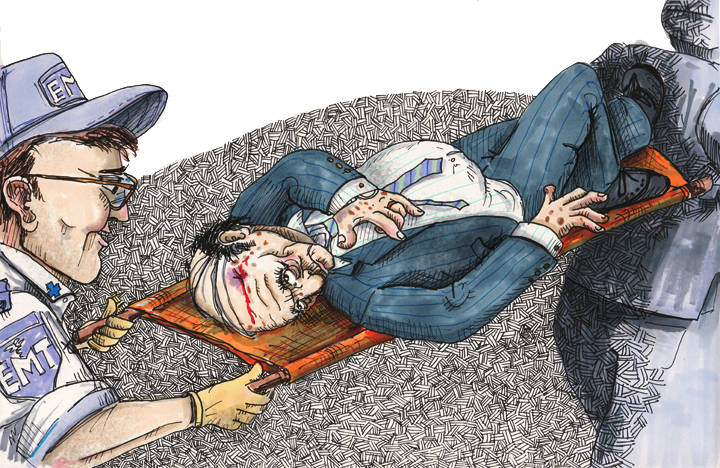
An old man is crossing the street in the Garment District and gets hit by a car. An ambulance arrives and two emergency workers carefully lift the old man onto a stretcher. As they are carry him to the ambulance, one of the EMTs asks the the old man, "Are you comfortable?" In obvious pain, the old man looks up and says, "I make a nice living."

Myron Cohen passed away in 1986.

Aug 31, 2008

memories

The challenge word on another illustration blog is "memories".
Broken bits of you and me
This week end is Labor Day weekend, the unofficial end of summer. I was prompted to think of all of the things I experienced this past summer. While not necessarily the best memory of the summer, the most unusual occurred on Memorial Day Weekend, the unofficial beginning of summer.
Read about that unusual memory HERE on my blog.

Aug 30, 2008

SFG: black

The current challenge word at sugarfrostedgoodness.com is "black".
oh, rats!
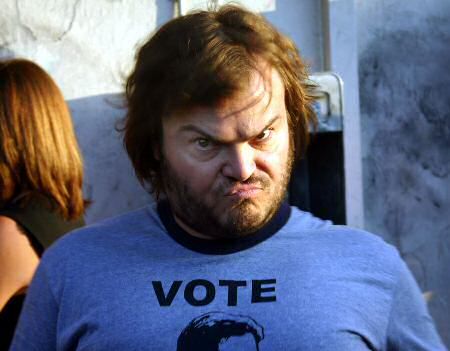
In the middle nineteenth century, Jack Black (no, not THAT Jack Black) served as rat-catcher and mole destroyer by appointment of Her Majesty Queen Victoria. That meant he was the head vermin exterminator, but he was a bit of a showman, too.
Henry Mayhew, founder of British humor magazine Punch, recalled that Jack Black (no, not THAT Jack Black) "the most fearless handler of rats of any man living." Proud of his profession, Black wore a wide leather belt inlaid with cast-iron rats. Black drove a cart with rats painted on the side panels. He would often stop his cart in busy areas of town for "performances". He had a stage rigged on the cart, on which were cages filled with rats. He would exhibit the rapid effects of his rat poison, by dipping his hand into a cage of rats and taking out as many as he could hold. He would then administer his own blend of rat poison right into the animals' mouths. However, his work experiences included a number of occasions when he nearly died from infection following rat bites.
When Jack Black (no, not THAT Jack Black) caught any unusually colored rats, he bred them, to establish new color varieties. He would sell his home-bred, domesticated colored rats as pets to well-bred young ladies to keep in squirrel cages. Beatrix Potter is believed to have been one of his customers, and she dedicated the book Samuel Whiskers to her rat of the same name.
Jack Black (no, no THAT Jack Black) had a number of sidelines beyond rats, including fishing (for food and supplying aquariums), bird catching, taxidermy and dog breeder.
The position of royal rat catcher disappeared in the early twentieth century. Unfortunately, THIS Jack Black was never caught.

Aug 20, 2008

SFG: olympics

dah dah da da da da dah
At the risk of offending those who may not share my views on the Olympics, my usual commentary can be found HERE on my blog.

Aug 5, 2008

SFG: mischief

The current challenge word on sugarfrostedgoodness.com is "mischief".
how can we dance when our earth is turning
In Northeast Philadelphia where I grew up, as in most places thoughout the United States, the night before Hallowe'en was recognized as "Mischief Night". In the 1960s, the time in which I grew up, the so-called mischief was usually of the "prank" variety and, for the most part, harmless. At sundown on October 30, some neighborhood kids would mark up car windows with a bar of soap. They would toss an egg or two at a random house. They may unload a battery of toilet paper on a neighbor's tree, entwining its autumn-bare branches in yards of Charmin.
One year, my brother sat in the darkness of or yard, poised with the garden hose in his hand, waiting patiently and silently for those young vandals. A group of kids approached my dad's Dodge Dart and my brother let loose his deluge. The kids scattered. I don't remember our house being a victim for years after.
While innocuous hijinks were the norm in my neighborhood, across the Delaware River in Camden, New Jersey, it was a different story. Beginning in the late 60s, things in Camden started to deteriorate. The Camden Fire Department started getting numerous false alarms and calls for trash fires. The seventies ushered in a period of significant civil unrest in Camden. The situation got dangerous for firefighters; people started throwing rocks and bottles at firefighters and their apparatus. This period of dangerous, at times riotous behavior spilled over into Mischief Night, which evolved into a much more destructive annual event. Every October 30th, hoodlums would do their very best to burn the city of Camden to the ground. Over 130 arsons were committed in Camden on the night of October 30, 1991. The next year, Camden started emptying the streets of potential troublemakers, busing thousands of teenagers to Halloween events outside the city. Camden officials also organized a massive police and fire presence, which along with a stricter-than-usual curfew, has helped tame Mischief Night.

Jul 4, 2008

SFG: spots

The current challenge on Sugar Frosted Goodness is "spots".
lady in red
Out, damned spot; out, I say. One, two,—why, then ’tis time to do’t. Hell is murky. Fie, my lord, fie, a soldier and afeard? What need we fear who knows it when none can call our power to account? Yet who would have thought the old man to have had so much blood in him?

These words are spoken by Lady Macbeth in Act V, scene 1 in Shakespeare's Macbeth. Lady Macbeth is sleepwalking through the castle. She is subconciously thinking and feeling guilty about being the driving force behind the murder of Duncan. After the murder, Macbeth believed his hand was irreversibly bloodstained, Lady Macbeth told him, “A little water clears us of this deed”. Now, she sees blood on her own hands. She is completely undone by guilt and descends into madness.
“What need we fear who knows it when none can call our power to account?” she asks, asserting that as long as her and her husband’s power is secure, the murders they committed cannot harm them. But her guilt-wracked state and her mounting madness show how hollow her words are. So, too, does the army outside her castle. “Hell is murky,” she says, implying that she already knows that darkness intimately. It is implied, although not directly stated, Lady Macbeth commits suicide.

Jun 21, 2008

SFG: tiny

The current challenge word on sugarfrostedgoodness.com is "tiny".
da plane! da plane!
Herve Villechaize was born in 1943 in Paris. A malfunctioning organ would leave Herve at a full-grown height of just under 4 feet tall. Herve studied painting and photography at the famed Beaux-Arts Museum in Paris. At the age of 18 he became the youngest artist to ever have his work displayed in the prestigious Museum of Paris.
At the age of 21 Herve sailed to New York City. After teaching himself English by watching American television and upon immersing himself in the New York City art scene, he would eventually land roles in several off-Broadway plays. In his first notable movie role, Herve played Beppo in the 1971 comedy The Gang That Couldn't Shoot Straight starring Robert DeNiro. He wouldn't experience his big break into show biz until 1974 however, when he landed the role of a tiny villain named Nick-Nack in the 1974 James Bond film The Man with the Golden Gun.
Herve moved to California, where he eventually hooked up with Aaron Spelling. Spelling would cast him opposite Ricardo Montalban on Fantasy Island. The show's six season run made a household name out of his character, Tattoo, and injected his signature call of "de plane, de plane" into American pop culture. Herve's newfound fame would lead him to command a whopping $25,000 per episode salary. Herve and his wife moved into a 2 1/2 acre ranch in the foothills of the San Fernando Valley. Soon, Herve began to sense he was not being treated as fairly as other Fantasy Island cast members. He responded by demanding the same money as Montalban, prompting ABC to drop Herve from the show.
Leaving Fantasy Island would prove to be beginning of his career decline. Herve, having blown through his Fantasy Island money, eventually had to sell his ranch in the Valley and move into a rental house in North Hollywood. His collapsing career and deteriorating health led Herve to the bottle. He would often consume two bottles of wine in a single night. While not that unusual for average sized people, it was detrimental to Herve as he tipped the scales at just 90 pounds.
Herve's medical condition was worsening. With increasing pain from internal organs that were too large for his body, Herve was taking upwards of 20 pills a day to alleviate the symptoms. He realized that his body was beginning to shut down, and found himself fending off frequent bouts of depression.
In 1993 Herve's luck would turn a bit towards the better. He found work in several TV commercials including a Dunkin Donuts spot that, despite his wishes to distance himself from his Tattoo days, would find him asking for "de plain" "de plain" donut.
On September 3, 1993, Herve, accompanied by his common-law wife, Katherine Self, attended a movie screening in Hollywood. They later enjoyed dinner at a restaurant near their home.
In the early morning hours of September 4, Herve placed two sound-muffling pillows against his chest, and fired a pistol into them.

Jun 8, 2008

SFG: star trek

The challenge word this week on sugarfrostedgoodness.com is "star trek".
get a life.
I was never much of a Star Trek fan. I was five years-old when the original series premiered. I've seen it, on and off, in reruns for years. I have seen a few of the movies. I just never "got it".

Read the rest HERE.

Jun 4, 2008

goth girl

oh, valencia
On Tuesday, I saw this girl on the train.

May 31, 2008

SFG: politics

The challenge from sugarfrostedgoodness.com this week is "politics".
I'll press your flesh, you dimwitted sumbitch!
W. Lee "Pappy" O'Daniel served as Texas governor and United States senator. Born in 1890 in Ohio, O'Daniel came to Texas at age 29 as a sales manager for Burrus Mills, a flour-milling company in Fort Worth. In 1928, O'Daniel took over the company's radio advertising and started a country music program to promote the flour. O'Daniel hosted the show and organized a band called the Light Crust Doughboys. Many of the musicians who made Western Swing famous, including Bob Wills, got their start in O'Daniel's band. In 1935 he organized his own flour company to make "Hillbilly Flour" and began to call his band the Hillbilly Boys. The slogan, "Pass the biscuits, Pappy," made O'Daniel a household name throughout Texas.
Radio fans urged "Pappy" to run for governor, and in 1938 he did. He attracted huge crowds, ran on a platform of the Ten Commandments and the Golden Rule, and won the election by a landslide. Unfortunately, O'Daniel possessed almost no qualifications for success in the governorship, and accomplished little of the agenda he had promised the people of Texas. He ushered in an era of censorship and limits on academic freedom at the University of Texas by his appointments to the Board of Regents. But despite his obvious shortcomings as a leader, he remained very popular due to his masterful radio showmanship.
In 1941, O'Daniel won election to the United States Senate in one of the most controversial elections in Texas history, edging out Congressman Lyndon Baines Johnson by only a handful of votes. O'Daniel was ineffective in the Senate and was shunned by his more serious colleagues. With his popularity finally on the wane, he did not seek reelection in 1948.
In later years, O'Daniel was active in business and made two comeback attempts at the governorship, basing his campaigns on crude appeals to anti-communist and anti-civil rights feeling. But time had passed Pappy by and he attracted few votes. He died in 1969.
The character of Mississippi governor Menelaus "Pappy" O'Daniel, played by Charles Durning in the film "O Brother, Where Art Thou?" is loosely based on the real W. Lee "Pappy" O'Daniel.

May 16, 2008

SFG: monsters

The sugarfrostedgoodness.com challenge word this week is "monsters".
The sound of your footsteps/Telling me that you're near/Your soft gentle motion, baby/Brings out the need in me that no-one can hear
In 1927 Tod Browning directed Lon Chaney Sr. in the film "London After Midnight". This silent film classic has become the most famous "lost" motion picture.
The movie told the story of wealthy Sir Roger Balfour. Balfour is found shot to death in his home. Inspector Burke, as played by Chaney, is called in to investigate. A suicide note is found and the case is supposedly closed. Five years later, Balfour's old residence is taken up by a man in a beaver-skin hat, with large fangs and gruesome, sunken eyes. His assistant is a ghostly woman, with flowing robes and raven black hair. It is suspected by neighbors that Balfour has returned from the dead.
In addition to his portrayal of the inspector from Scotland Yard, Lon Chaney Sr. also played the mysterious stranger that moves into the vacant Balfour Home. Chaney, known as "The Man of a Thousand Faces", designed his own make-up for his film appearances. His visual effects for London After Midnight were particularly horrifying. The teeth Chaney wore were made of gutta-percha, a hard rubber-like material. The bulging, hypnotic eye effect was achieved with special wire fittings which he wore like monocles. He allegedly put egg albumen in his eyes to give them a "clouded" appearance.
The film was well-received at the box-office, grossing almost $500,000. It was even remade by Browning in 1937 as "Mark of the Vampire" starring Bela Lugosi. However, in 1965, an electrical fire broke out in MGM Film Storage Vault #7. Countless films from the silent era, including the last known print of "London After Midnight", were destroyed.
In 2002, Turner Classic Movies commissioned film restoration producer Rick Schmidlin to produce a 45 minute reconstruction of the film, using still publicity photographs shot while the film was in production in 1927.
There are rumors that one copy of the original remains in a private film collection in Canada.

May 10, 2008

SFG: c is for...

...Capgras delusion.
I'd hate to wake up some morning and find out that you weren't you.
Capgras delusion (or Capgras syndrome) is a rare disorder in which a person holds a delusional belief that an acquaintance, usually a spouse or other close family member, has been replaced by an identical looking impostor. The Capgras delusion is classed as a delusional misidentification syndrome, a class of delusional beliefs that involves the misidentification of people, places or objects. It can occur in acute, transient, or chronic forms.
The delusion is most common in patients diagnosed with schizophrenia, although it can occur in a number of conditions including after brain injury and dementia.

Apr 26, 2008

SFG: imagine

The challenge on sugarfrostedgoodness.com this week is "imagine".
what about science?
On March 5, 1983, Journey Into Imagination opened in Walt Disney World's EPCOT Center (as the theme park was known at that time). The ride began with riders boarding their omnimover vehicles that seemed to be “floating” in the clouds. The clouds would part and riders would see the silhouette of a strange blimp mixed with a vacuum cleaner and hear the humming and singing of its pilot. In the next scene, riders come right next to this vessel and the pilot, an audio-animatronic man with a red beard dressed in a blue suit and top hat. He introduces himself as the Dreamfinder (voiced by Chuck McCann) and he says that he uses his vehicle (called the Dream Mobile or Dream Catcher by some fans) to collect dreams and ideas to create all sorts of new things. Soon he creates a Figmentof his imagination: a small, purple audio-animatronic dragon (voiced by Billy Barty). [McCann and Barty previously appeared together in the 1978 film "Foul Play".] Both of them come up with ideas to fill the "idea bag". When the idea bag is full, Dreamfinder states that the ideas need to be emptied in the "Dreamport" which he states is "never far away when you use your imagination". Academy Award winners The Sherman Brothers (whose compositions include songs from Mary Poppins, Winnie The Pooh, Chitty Chitty Bang Bang, the Disney staple "It's a Small World") wrote the song "One Little Spark", which is played throughout the entire course of the ride. This version of the ride closed on October 10, 1998 in order to begin a major renovation.
The ride reopened on October 1, 1999. This version featured Dr. Nigel Channing (played by Monty Python's
Eric Idle) and a considerably-reduced role for Figment. Figment only appeared in filmed cameos in the ride's queue area and not at all in the actual ride. And Dreamfinder? Dreamfinder was sent packing. This incarnation closed a mere two years later, on October 8, 2001 and went through another rehab.
The current version of the attraction opened on June 2, 2002. Dr. Channing was back, with an altered storyline and Figment returned with a larger role and appeared in every show scene. The song "One Little Spark" also returned with new verses. Dreamfinder, once again, is nowhere to be seen.
Dreamfinder, I believe, is living in a discarded refrigerator box beneath the water bridge that connects
Bay Lake and the Seven Seas Lagoon. Throw him a quarter on your next visit to Walt Disney World.

Imagine that.

Apr 21, 2008

yfz

I want it long, straight, curly, fuzzy, snaggy, shaggy, ratty, matty, oily, greasy, fleecy, shining, gleaming, steaming, flaxen, waxen, knotted, polka-dotted, twisted, beaded, braided, powdered, flowered, and confettied, bangled, tangled, spangled and spaghettied!
The story of the YFZ (Yearn for Zion) isolated compound in Texas has been front and center in the news for the past few weeks. One of the most intriguing parts of this story is the women of the community. Since the first pictures of the women surfaced, I know I have been fascinated by their appearance. They all seem to share similar characteristics. They are very soft-spoken. They speak slowly, deliberately and monotone. They all have that same calm and far away look in their eyes.
I have seen several television interviews with some of the women, where they were questioned about their plain, solid-colored, pastel dresses and their plain yet elaborately arranged hairstyles. One woman eerily smiled and said their clothes and hairstyles have no significance, that they make their own clothes and they all like to wear long hair.
I read a conflicting explanation. It said: "the dresses are meant to show modesty and conformity. They go down to the ankles and wrists, and are often worn over garments or pants, making sure every possibly provocative inch of skin is covered. The appearance of unity through uniform dress, however, can belie the jealousy that often arises when the women — who might all look alike to an outsider — find themselves in competition with one another over the affections of the same man. The clothing is also stitched with special markings "to protect the body and to remind you of you commitment." The report went on to explain the hairdos, saying "the women never cut their hair because they believe they will use it to wash Christ's feet during the Second Coming. A Biblical quote says a woman's hair should be her crowning glory. "

It brings to mind the Rado/Ragni lyrics....
They'll be ga-ga at the go-go
when they see me in my toga
My toga made of blond, brilliantined, Biblical hair
My hair like Jesus wore it
Hallelujah I adore it
Hallelujah Mary loved her son
Why don't my Mother love me?

Apr 17, 2008

SFG: noir

The challenge this week on sugarfrostedgoodness.com is "noir".
You'll see it coming toward you, real slowly for a shake
I saw "Scream" a few days ago on one of the many movie channels on cable television. I had seen it several times before. It's not a great movie, but it is funny the way Wes Craven pokes fun at himself and the genre that made him famous.
The soundtrack features one of my favorite songs, Nick Cave's "Red Right Hand".
Nick Cave is an Australian musician, songwriter, author, screenwriter, and occasional actor. He is best known for his work with his band, the Bad Seeds, and his fascination with American music and its roots. He has a reputation, which he disowns and dislikes, for singing dark, brooding songs which some listeners regard as depressing. His music is characterised by intensity, high energy and a wide variety of influences. Cave's music exhibits his obsessions with religion, death, love, America, and violence with a bizarre, eclectic blend of blues, gospel, rock, and punk. "Red Right Hand", while obviously falling into the noir category, tells a story that is wide open to interpretation.

Apr 10, 2008

SFG: shy

Sugarfrostedgoodness.com's challenge word this week is "shy".
Dear God, sorry to disturb you, but... I feel that I should be heard loud and clear
Andy Partridge, the founder of eclectic rock group XTC, suffered a nervous breakdown, which manifested itself as uncontrollable stage fright. It was brought on by his wife, Marianne, throwing away his supply of Valium. Andy had become dependent upon the drug after it was prescribed to him as a teenager during his parents' divorce. He was never fully withdrawn from the drug and became dependent on it.
Concerned about her husband's dependence on the drug, Marianne threw his tablets away — without seeking medical advice — just before a 1982 Paris concert. Not surprisingly, Partridge suffered anxiety attacks of such severity that he was forced to withdraw from touring permanently. The remaining European and British dates were cancelled and after completing only one show in San Diego the whole US leg was also abandoned. Since then, XTC have been exclusively a studio band.